
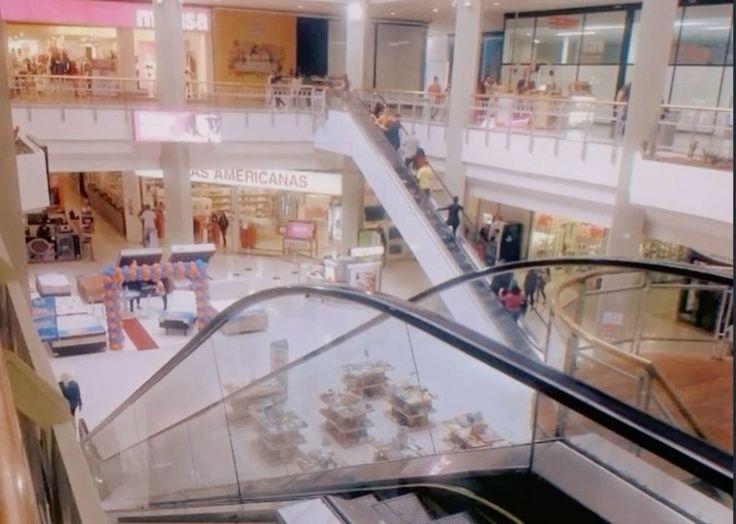
Going to your local mall with family or friends, grabbing a bite from Wetzel’s Pretzels, wandering in and out of various stores, relaxing at the food court: it’s an experience that many of us shared. Think about the specific mall you typically went to; today, is it the same as it once was? For many of us, that beloved local mall that was once lively is now a lot quietier and emptier.
Across the U.S., shopping malls that once thrived have now become “dead malls” with barely any foot traffic and lots of vacant stores. The most logical cause of this phenomenon is the rise of online shopping which has slowly killed mall culture. Two obvious victims of this in Seattle are Northgate Mall and Pacific Place.
Opening in 1950, Northgate Mall was once a bustling shopping center in the Northgate neighborhood. As of 2012, Northgate Mall had around 100 stores. [CQ] Business began to decline in the late 2010s, with the mall reportedly making significantly less money than other shopping centers in the area. With this declining revenue, plans for redevelopment into a mixed-use center began in 2018. [CQ] In 2019, JCPenney, Nordstrom, and Macy’s had all closed, and demolition occurring around various areas of the mall further decreased foot traffic. [CQ] Today, only a few stores still stand, such as Barnes & Noble and Nordstrom Rack, with a majority of the former shopping space occupied by the new Kraken Community Iceplex and seemingly everlasting construction sites.
Pacific Place, which opened in 1998, was a lively shopping mall in downtown Seattle with around 50 stores occupying its space. [CQ] In 2017, redevelopment of the mall began. After reopening in 2020 with only 12 open stores, the mall felt desolate to a lot of visitors. [CQ] As of today there are only 15 permanent businesses operating, with survivability dependent on small businesses and nonprofits taking up temporary leases in the vacant spaces. [CQ]
However, not all shopping malls have met this fate, with some in the Seattle area as active as ever. Any UW student can tell that University Village is always busy. As someone who works in Bellevue Square, I can attest to the fact that the crowds never die down. So why have some malls died while others continue to thrive?
Shopping malls have become less of a necessity due to the emergence of online shopping. Without the necessity of in-person shopping, people now go to malls solely for entertainment. The experience of going to a mall is something that people continue to enjoy. Malls can serve as third spaces: convenient collections of shops and activities welcoming to anyone interested in shopping or exploring. Experience is the priority. With this standard, the system of retail stores and food courts aren’t cutting it. The casualness is gone. Wetzel’s Pretzels’ are being replaced with Din Tai Fungs, and Forever 21s replaced with Aritzias, in favor of the emphasis on higher-end experiences. Continually successful malls offer a mix of retail, restaurants, and entertainment to keep customers interested in in-person shopping.
The casual mall shopping experience is gone, and the malls that couldn’t adapt to the new entertainment standards have either become completely dead or continue to struggle. Though there are still many thriving malls, it is sad to see how the once lively spaces of the past have become so empty in this new era.



 Muse Media UW
![[CQ]](https://blogger.googleusercontent.com/img/b/R29vZ2xl/AVvXsEiQ0TYa9znCLE76Lp1c_0H9nmVfT8IG2SokC3yx5hcAXeCyfjfi8Irz6DTIkmej6jUKYswRhdTq6zOZ-rQGZHYlWaExiSaLr88fkCE1yOevpl2ocElZxDF7HxFXYslbk8XASRGtCNDFGoGBUJi0Mj01tUg2_tA2Bt1eKzIKghDhLBni7K8EaWH2QEvyrg/s1333/Northgate%20Mall,%20Seattle,%20WA%20005b.jpg)