
AI is a polarizing topic in the public eye. Between the Trump administration repealing Biden’s executive order, 14110, that required safe, secure and responsible development of artificial intelligence and the launch of Project Stargate there are no legislative protections for the public. Society is asked to trust tech companies and their training models, yet the industry has repeatedly shown a bias against women and people of color, one that has seeped into AI.
A study from Harvard recently found that women use generative AI 25% less than men, with 50% of men reporting use in the last 12 months. Since AI is trained on interaction, less use from women means that early models are being trained to reaffirm bias.
Something we’ve all learned in one way or another is that online-techy ideas tend to infiltrate everyday life, causing shifts in social dynamics. According to UN Women, ChatGPT advised women to ask for lower pay raises than their male counterparts. The Guardian found that AI is also downplaying women’s medical symptoms which leads to further bias in care decisions. They noted that words such as “disabled” and “unable” came up far more in male patient summaries than in those of women.
AI is being recommended as a tool to simplify complicated concepts and dole out advice, the belittling of women’s medical concerns and position in the workplace has the potential to further the wage gap and contribute to misinformation.
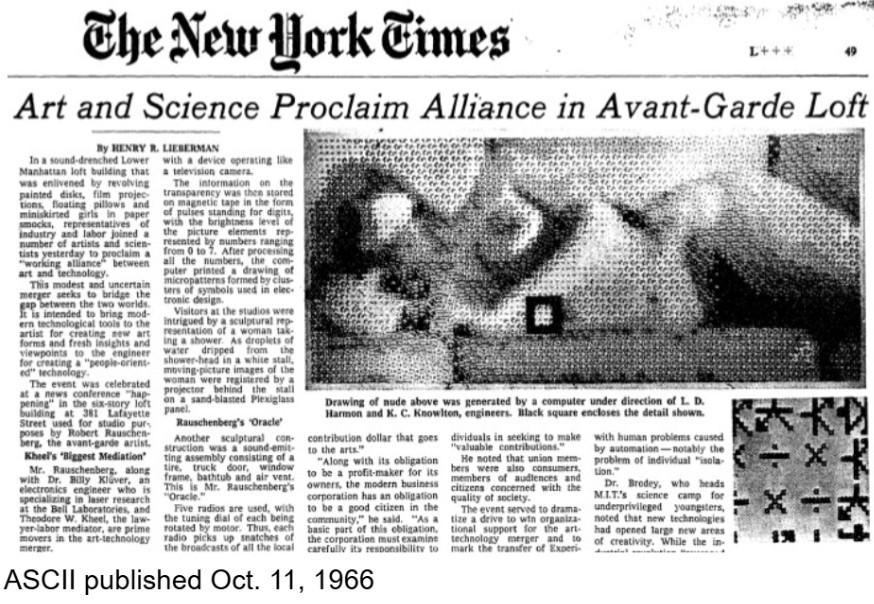
Women’s mistrust of AI is not wrongly placed. Technological advancements have always oversexualized women. The first published ASCII image was a nude in the New York Times. The first JPEG ever was an image of a playboy model. These examples place women’s images at the mercy of technology. This new tech presented the ability to share images quickly with no face-to-face consequences. What was the first thought the tech industry guys had? Let’s send hot chicks to each other!
The exploitation of women’s bodies and images is nothing new and won’t be changing with AI. Deepfakes and “AI girlfriends” started the minute AI was introduced. It arguably existed already with female androids in movies such as Blade Runner and Ex Machina, and the feminization of products like Siri and Alexa. The common male fantasy of control and servitude is easily met in an “ethical” way by inserting a robot in the form of a woman. This trope is a degradation of womanhood, separating it from humanity.
There are equally a number of women engaging in relationships with AI “boyfriends” and, although it’s unhealthy, it’s only a gateway to the dangers of AI abuse. Abuse that affects women at much higher rates than men. The UN reported that 38% of women have experienced digital abuse from AI and 85% have witnessed it. We are constantly reminded that “the internet is forever” and the risk of an individual’s image being distorted and distributed with no control on their part is scary. UN Women also reported that 95% of pornographic deepfakes are nonconsensual and of those 99% are women.
According to The Verge and other tech news ChatGPT will be launching an adult mode model soon. This model will allow users to have explicit and erotic conversations with the chatbot. OpenAI CEO, Sam Altman, stated they were working on making it as responsible as possible but with the amount of abuse already taking place there is room for doubt. At the same time, female OpenAI policy executive Ryan Beirmeister, stepped down only a month after her opposition to ChatGPT’s adult mode. She has said there is no correlation but many online circles, including the Wall Street Journal have shared skepticism.
In response to the finding that women are using AI less which contributes to bias in the metadata, many have argued that women should just use it more. In some sense that would help but this ignores the actual reason for women’s lack of enthusiasm. Trepidation from past abuses and slower adoption shouldn’t be painted as a bad thing. The tech industry is moving so quickly and embracing structures that allow us to outsource critical, human, thinking that any legislation with the potential to protect the general public has not had time to catch up. This, coupled with the fact that so many tech companies have political sway due to financial contributions and the weight of economical impacts makes it obvious who AI is helping, and who it is hurting.
To some AI can feel like an exciting sci-fi movie come to fruition, like we’re living in the future. In reality, glorifying genAI over the equity of women and minorities will only set us back.