
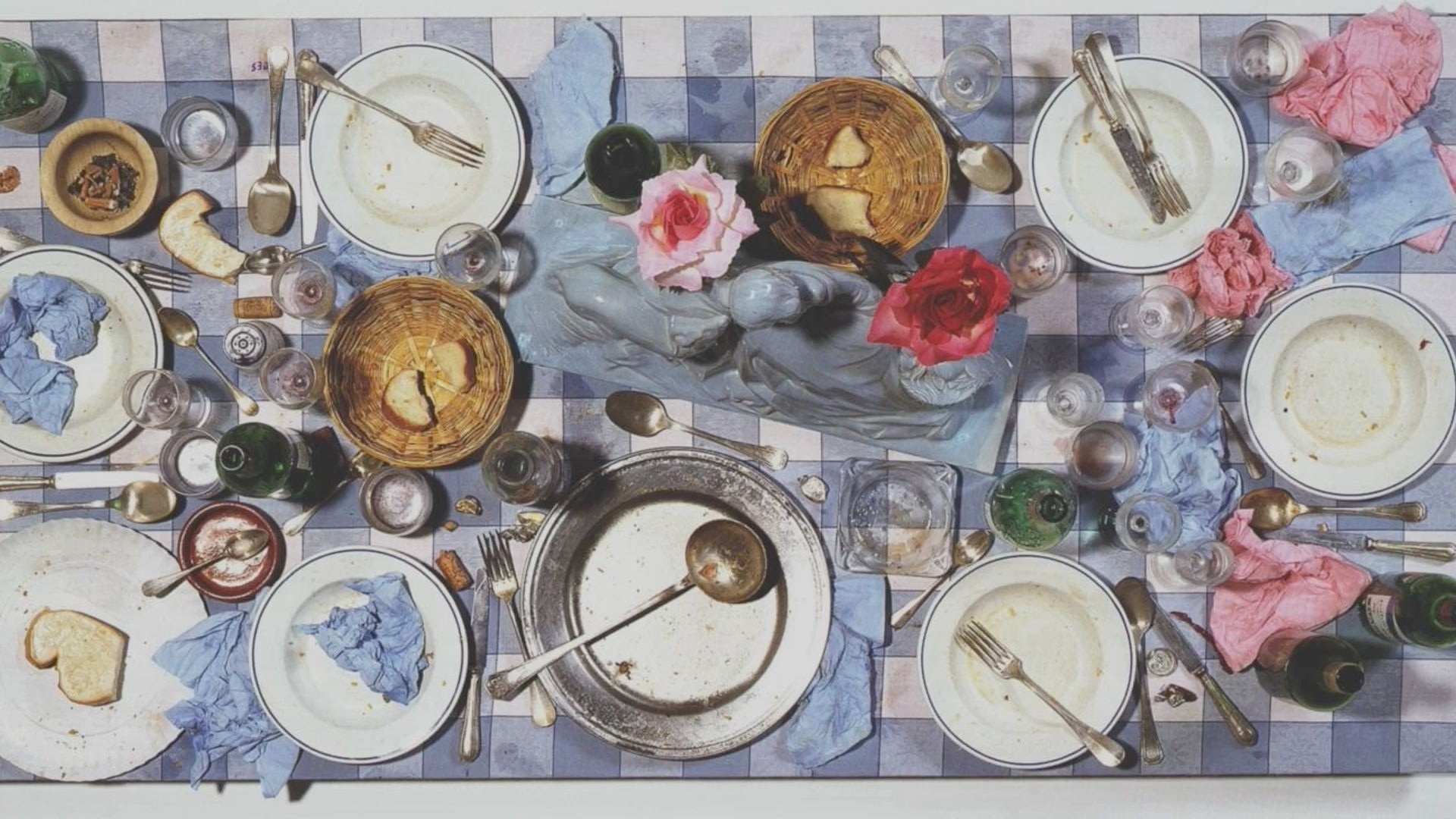
Approaching midsummer dinners at my grandmother’s meant steeling one’s nerves and taking several breaths before plunging into a flurry of conversations and a mass of tangled arms, all reaching for dishes conveniently placed on the opposite side of the creaking table. Piping plates of various dumplings, chilled plates of okroshka, a steaming pot of plov, and colorful mountains of fresh herbs and vegetables from the garden beds, were all fighting with elbows and utensils for precious real estate. This battleground was further complicated by a balancing-act of mismatched stools and irregular china allocated for the various neighbours stopping by to chat, or for the relatives visiting from neighbouring towns. All while saving space for the various victims, I mean helpers, dutifully stacking even more dishes coming out from the steaming kitchen.
Yet, this scene was not just reserved for special events. To my grandmother (or for that matter, to every grandmother in the world it seems), every meal was an occasion to go all out, for good food always came with good conversation, and good conversations in tandem with good food meant excellent health.
As such, when my family moved from Ukraine, that all-out mentality stuck, and although slightly altered by our new surroundings, the dishes galore remained. With such a wide plethora of mains, sides and accoutrements, it’s only natural that all meals came to be “family-style,” à la meals served on large platters from which one takes as much as they desire back to a smaller, personal dish. Like in many other cultures across the globe, family-style meals have always been the norm for us, and thus it became a sort of respected ritual: despite all of our chaotic and rarely overlapping schedules, a certain time was reserved solely for respite of food.
Of course, I have come to find that in the United States, the term “family-style” has come to be coupled more often with dining-out. Something, that in recent years, with the rise of delivery convenience and the growth of take-out culture, has shifted into its own, separate gastronomical headache. But, I will dare to be bold enough to claim that dining family-style solves this issue in many cases, though granted it is not suited for all scenarios.
Not only does delegating and selecting what to order for the group get the conversations flowing, it also frees you from the grasp of choice paralysis, allowing you to order several dishes off of the menu, be it for the sake of exploration or compromise. You are unburdened from the need to eat at a pace set by others: after all, simply grab however much your heart desires, and then nod along to other’s stories while scarfing down morsels as quickly or slowly as you see fit.
Plus, if a certain dish ever catches your fancy, or matches your needs, I truly believe that there is no pressure or unknown contract signed that would prevent you from deviating and ordering a little something just for yourself, and so long as you don’t impose its cost onto others, you will not banished from the table for the crime of shattering a communal affair.
In addition, despite many of us being raised to not take the last bite, leading to many a western-tumbleweed-floating-by style standoffs, sharing platters in the long run reduces the likelihood of food waste, since you eat only so much as you can handle, allowing others to take as much, or as little as they want. At the same time, it also fosters a sense of camaraderie and adventure, for when else would you dare to order the leviathan rack of ribs, the family-sized portions, that unfamiliar appetizer, or that mountain of delectable-wonders too daunting for just one stomach?
So, the next time we sit down together, be it at home or at a restaurant, and the steaming dishes begin coming out one by one, would you be so kind as to please pass the plate?