
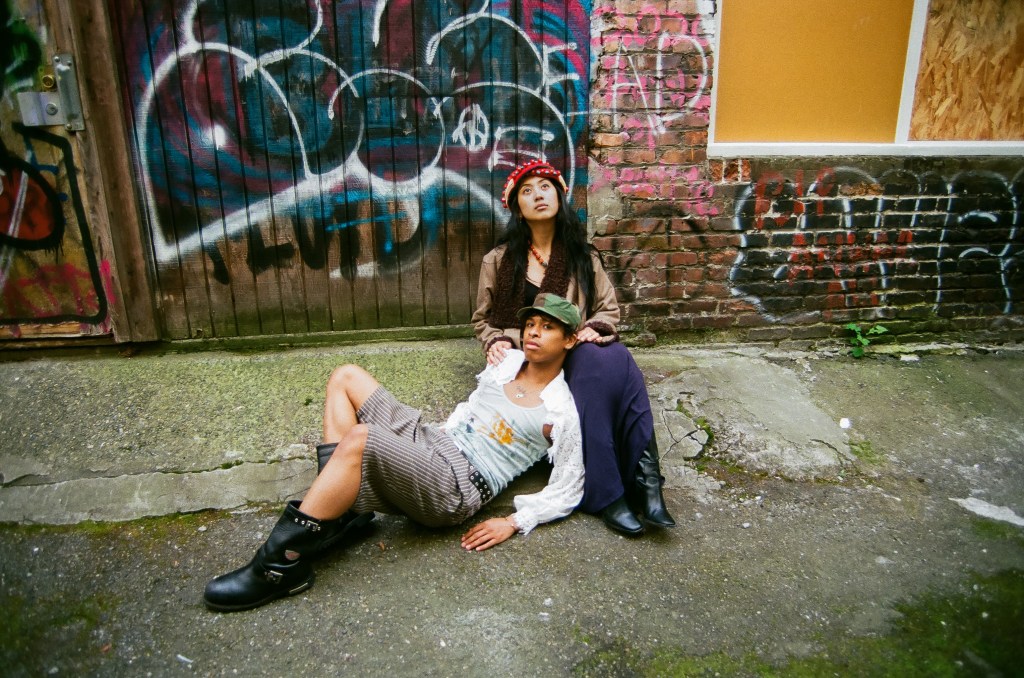
Everyday outfits become canvases for heritage and expression. In the wardrobes of the diaspora, culture and contemporary collide— When thrown into a new world, many of us cling to the past, adapting and creating a hybrid form of the past and present. Young individuals who have faced diaspora often find themselves searching for parts of their heritage in the West, incorporating ethnic backgrounds into everyday wear through small pieces, leaving clues for the Western eye to decipher: Jewelry, scarves, flowing gowns—each piece a vibrant reminder of home. This wave of fashion in the diaspora has rippled through groups that have been forcefully pushed away from their native land. Stripped of choice, we hold onto our homelands through fabric and thread.

Born in Tamil Nadu, South India, Tenzin Lodoe moved to the U.S. when she was three. As a Tibetan in exile, cultural preservation isn’t just a sentiment—it’s a responsibility. “We don’t have the authority to preserve our culture in our own country,” she tells me. “So wearing traditional clothing is just as important as speaking our native language.” For Lodoe, clothing is charged with symbolism. She grew up attending temple in vibrant chubas, inspired by the colors of Tibetan prayer flags—red for fire, yellow for the earth, white for air, blue for the sky, and green for water. These aren’t just colors. They’re elemental representations of resilience and resistance. On Lhakar, a weekly practice of protest against Tibetan oppression, her community would wear white and gather to dance and embrace music—a visual demonstration of solidarity and identity.
As a child, Lodoe attended Sunday school, but it was after feeling isolated in high school that she began to reconnect more intentionally with her roots. “I didn’t understand who I was if I didn’t understand where I came from,” she says. After graduation, she returned to India and studied at a college for Tibetan studies, deepening her understanding of her heritage.

Ronel Cooper moves through the world with a quiet grace that reflects both his Filipino and Black heritage— shaped most vividly by his family, especially his mother. “A lot of older Filipino people are like idols,” he says, noting how many tend to carry themselves with elegance. That subtle sophistication finds its way into his wardrobe: “I think I like to add that into my personal style… a touch of elegance and confidence.” Growing up, his biggest style icon was right at home. “Definitely my mom,” he says. “I’d go through her closet and find baby tees, fitted zip-ups—and always ask if I could have them.” Her love for accessorizing, particularly with gold jewelry, made a lasting impression. Cooper has inherited his moms style in many of the ways he inherited her culture.
Fashion isn’t the only space where Cooper sees his culture show up. “Food, obviously, is number one,” he says. “I find myself going home just to eat her food—it’s a cure for feeling homesick.” Beyond that, he finds comfort in the humor and community that are cornerstones of Filipino culture. “Filipinos love to crack jokes, and I think being around that, or even just hearing someone speak Tagalog in public, makes me feel safer. It’s a sense of familiarity.”

Fashion in the diaspora is more than just style—it’s a living archive. For individuals navigating displacement, style becomes a form of storytelling, a silent but powerful narrative woven with memory, identity, and longing. Each garment, accessory, and color choice carries echoes of ancestral lands, speaking to cultural roots that refuse to fade. Whether it’s Tenzin’s chuba radiating with elemental meaning or Ronel’s jewels passed down like heirlooms, these choices are acts of cultural preservation. In a world that often demands assimilation, fashion allows diasporic communities to reclaim space, to assert who they are and where they come from. Its resistance stitched in silk, history wrapped around the wrist, and pride draped across shoulders—a quiet revolution unfolding in fabric and form.
Reach column writer Zain Al Neema at musemediauw@gmail.com
Instagram @zainneema
Reach photographer Miranda Scott at musemediauw@gmail.com
Instagram @miranda_l_s


 Muse Media UW