
Living Well

Monotony is an easy habit to fall into. Often I go about my day mindlessly, giving no thought to the spaces I occupy. But sometimes, as I shuffle through my apartment, I’ll take a step back and realize I’m no longer in that vacant, blank space I moved into. Sometime between then and now, this place became my room. When did this happen? How is it that this space is me?
With this question in mind, I visited the homes of UW students Reagan, Anna, and Lu to talk about their interior design preferences. I found that an individual’s taste in decor and design differs greatly from person to person, and their reasons for choosing a particular aesthetic could generally be summed up by: “It brings me joy.”
Besides the elusive concept of joy, what makes a room? Put simply, it’s belongings. In each space I visited, I was directed to a Littlest Pet Shop collection, Chinese knots strung along the walls, and mindfully curated bookshelves.
“I’m a very material person,” Reagan shares. “Not like money or expensive things. It’s just, I love things. They always remind me of memories.”
Anna echoed this response. As an only child with no cousins, she is the conduit for all the hand-me-downs. She’s the proud owner of the kitchenware passed down from her German grandmother and trinkets inherited from late relatives.
“It’s a cool responsibility to be the storyteller and to tell the story through the things I have.”
In line with this love for objects rich in story is the distaste for things with no story. All agreed that their least favorite interior designs were the ones that looked sterile. The last place anyone wants to live in is a room revealing nothing of its inhabitants, stripped of the richness of identity.
Anna shared with me a comical Tumblr take on this kind of look in a text post that read your home has the aesthetic of a dentist’s office and the comfort level of an airport lounge. When a room loses any trace of its inhabitants, it becomes draining to be in.
Evidence of inhabitance is a key ingredient to a beautiful room. A room bears witness to you and the forces that impact your life, and it’s these fluctuations in personal style that give a room its unique charm. In Lu’s case, he finds that his room “changes with (him) as a person, whether it be my journey through becoming queer, becoming trans, my journey connecting with my Chinese culture, my journey through political education.”
As you explore your identity, your room shifts to reflect new revelations and values.
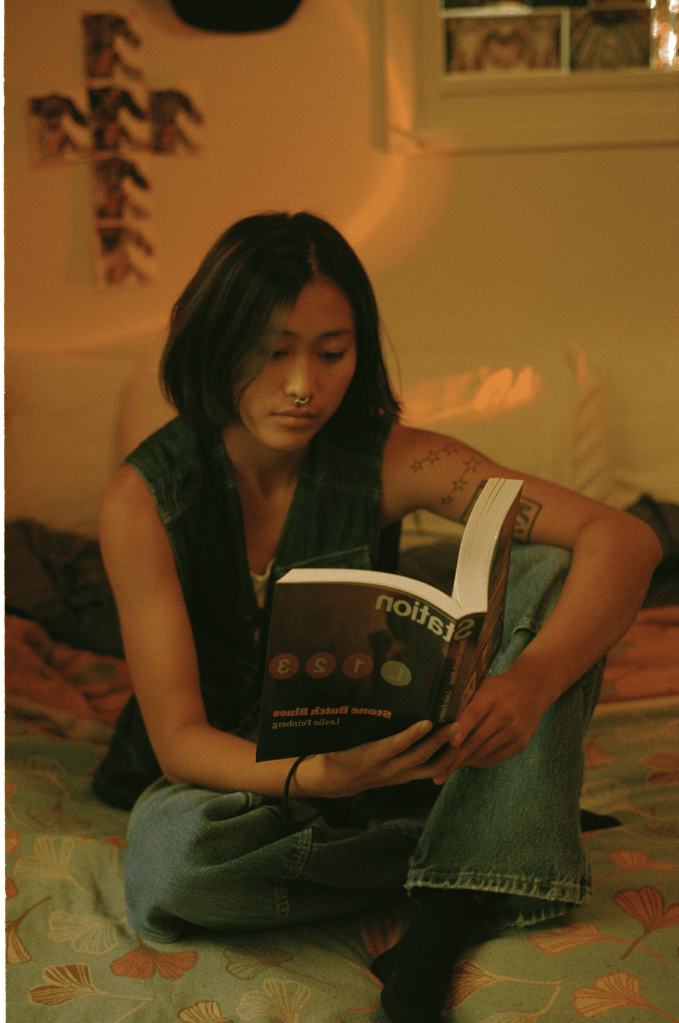
Once a home embodies these values, it can be a reminder of your core. Placed in each room were several of these reminders. In Reagan’s room, it was a bookshelf. Atop the bookshelf sat her Tokidoki figures, which revealed a fun story with her dad. After first being dismissive of the “children’s toys” Reagan wanted to get, he started helping her strategies the best way to get the figurine she wanted at a shop in Pike Place.
For Anna, the place that felt most her was also a bookshelf. Sitting comfortably between the TV and a door was a wooden bookshelf lined with women’s history books, D&D guidebooks, Star Wars legos, and frog trinkets. To Anna, choosing this space as the place that felt most like her was easy because “all of this is me.”
When asked the same question of what spot felt most him, Lu pointed to his book collection sitting under his nightstand because “it represents everything I’m interested in in one spot,” from neurodiversity to the queer rodeo scene. Beyond the book stack, the items Lu chose to hang also speak to his character.
Across the room hangs a traditional white Chinese shirt Lu wore to a rally for the liberation of Palestinian people. Red hand prints are smeared onto the shirt to represent how many people had been murdered and martyred, and Lu has it hung up to serve as a reminder of not only his connection to Chinese culture but also how interconnected everyone and everything is. The items Lu has around his room serve as reminders of his values, and his revolutionary spirit shines through in each belonging. For Lu, “having things around keeps [him] agitated and not letting [himself] get complacent or comfortable.”
Generally, what brings joy, acceptance, and pride makes up a room’s essence, and when it’s identified, it can be replicated anywhere. In my conversation with Lu, he mentioned that he does not attach home to a place, instead building it in places where he feels he can exist freely. To create this space of solace, he brings artifacts of the people who represent what home is and surrounds himself with objects, “whether it be decor or actual things that I can use like art, music, or books that I feel I can understand and that truly understand me.”
The past, present, and future can all be found in a living space, each communicating with the other as they accompany you throughout life. No amount of clean-outs or revamps will ever result in a full reset, artifacts from your past will inevitably make their way into your future. It’s this condensation of identities that brings your space its energy, so make sure to tap into it as you navigate decorating your space. The renowned interior designer Albert Hadley once said, “The essence of interior design will always be about people and how they live.”
Notice how you live, and design your space with it in mind.
Reach column writer Sydney Lai at musemediauw@gmail.com
Instagram @sydneyl4i


 Muse Media UW